
The history of Constellation Energy can be divided into four primary phases:
Phase 1: Origins and Transformation (1816–1999)
The company’s roots trace back to the founding of the Baltimore Gas Light Company in 1816, which eventually became the Baltimore Gas and Electric Company (BGE). In the 1990s, in response to energy market deregulation, BGE underwent a restructuring in 1999 to establish the Constellation Energy Group. This move separated its competitive power generation and supply businesses from its regulated transmission and distribution operations.
Phase 2: Market Expansion and Merger (1999–2012)
During this period, the company aggressively pursued energy market liberalization through acquisitions and commercial expansion. In 2012, Constellation Energy Group merged with Exelon, becoming the competitive power generation subsidiary under the Exelon umbrella. This merger combined the strengths of both companies, significantly expanding the scale of their nuclear and other clean energy assets.
Phase 3: Operations under Exelon (2012–2022)
Within the Exelon framework, the company focused on optimizing its generation fleet, prioritizing operational excellence in nuclear power. It solidified its market position through the acquisition of additional nuclear plants and technical upgrades. During this time, the company established itself as a leading competitive energy supplier and expanded its market share in the retail energy sector.
Phase 4: Independent Listing and Clean Energy Transition (2022–Present)
In February 2022, Exelon spun off its competitive power generation and retail operations to form the independent Constellation Energy Corporation, which is now listed on the New York Stock Exchange. The company currently focuses on advancing its 24/7 Carbon-Free Energy (CFE) strategy. Through nuclear life extensions, hydrogen R&D, and clean energy contracts with major tech firms like Microsoft and Meta, it has established itself as the largest producer of carbon-free electricity in the United States.
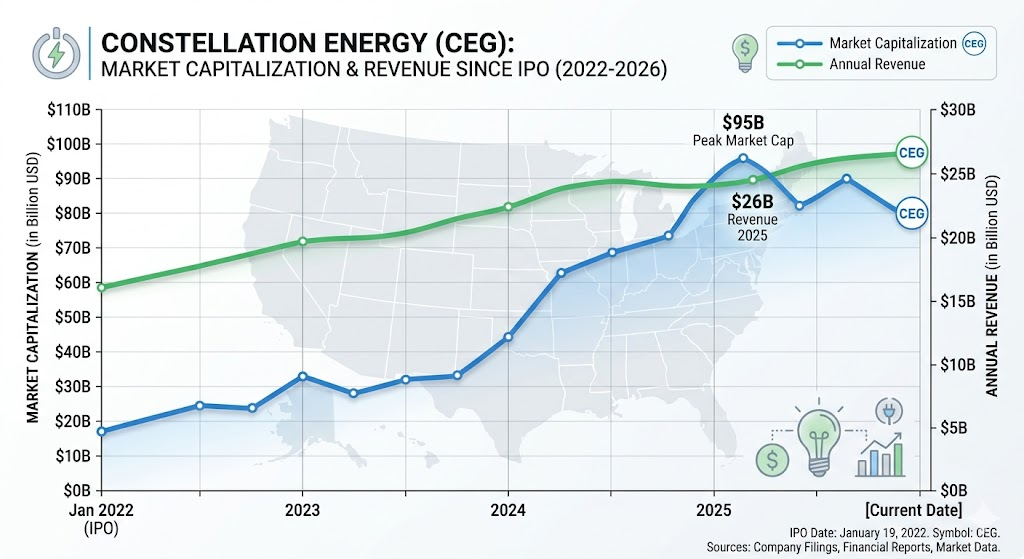
Constellation Energy holds a unique competitive position as the largest clean energy producer in the United States. Below is an analysis of its competitive landscape:
Core Competitive Advantages
- The Nuclear Moat: The company owns the largest fleet of nuclear power plants in the U.S. Nuclear energy provides unparalleled 24/7 carbon-free baseload power, a capability intermittent resources like wind and solar cannot match. This makes Constellation the partner of choice for AI data centers and Hyperscalers.
- Strategic Contract Positioning: Through long-term Power Purchase Agreements (PPAs) with tech giants like Microsoft and Meta, the company has secured predictable, long-term cash flows, mitigating merchant power price volatility and cementing its leadership in the energy transition.
- Asset Irreplaceability: Management emphasizes that its roughly 55 GW generation fleet creates high barriers to entry. Building equivalent nuclear and energy infrastructure requires massive capital expenditure, stringent regulatory approval, and long construction timelines, making it nearly impossible for competitors to replicate its market share quickly.
Key Competitors
Constellation Energy faces competition across several sectors of the energy industry:
- Large Utilities and Integrated Energy Companies: Players like NextEra Energy (a leader in renewables), Southern Company, Duke Energy, and Dominion Energy maintain massive market shares and dominate the regulated transmission and distribution space.
- Competitive Generation Companies: Vistra Corp and NRG Energy operate directly in competitive wholesale markets, competing head-to-head with Constellation in power dispatch and retail energy services.
- Emerging Tech and Asset Providers: Companies like GE Vernova (equipment and technology) and Brookfield Renewable (renewable asset investment) exert pressure through innovation and capital allocation in the green energy space.
Market Competitive Landscape (Porter’s Five Forces)
- Threat of New Entrants (Low): Massive capital requirements, complex regulatory environments, and decade-long development cycles act as formidable barriers to entry.
- Bargaining Power of Suppliers (Moderate): The nuclear fuel supply chain is highly concentrated, introducing specific geopolitical and pricing risks.
- Bargaining Power of Buyers (High): Large-scale Commercial & Industrial (C&I) clients, particularly hyperscalers, command massive procurement volumes, granting them leverage in contract negotiations and pricing.
- Threat of Substitutes (Moderate): While advancements in Renewables + Storage continue, nuclear power remains currently irreplaceable for the high-stability, high-capacity baseload requirements of modern AI data centers.
- Intensity of Rivalry (Moderate): Competition focuses on grid reliability and cost efficiency. As demand from the AI sector surges, the primary competitive battlefield has shifted to which firm can most effectively provide 24/7 Carbon-Free Energy (CFE).
2026 Strategic Outlook
The company is strengthening its competitive edge through:
- AI Infrastructure Expansion: Actively pursuing the restart of nuclear facilities (such as the Crane Clean Energy Center) and power uprates to meet the insatiable energy demands of data centers.
- Diversified Energy Portfolio: Leveraging natural gas assets (via integration) and developing clean hydrogen to balance the flexibility and reliability of the grid.
- Financial Performance: Targeting an EPS growth rate of over 20% from 2026 through 2029, supported by a fortress balance sheet and consistent cash flow generation.
Source:
- https://www.constellationenergy.com/about/business-overview/history.html
- https://portersfiveforce.com/blogs/brief-history/constellationenergy
- https://matrixbcg.com/blogs/brief-history/constellationenergy
- https://www.distillintelligence.com/competitors/constellation
- https://www.marketbeat.com/stocks/NASDAQ/CEG/competitors-and-alternatives/
- https://www.investing.com/news/company-news/constellation-energy-q1-2026-slides-earnings-beat-20-growth-target-93CH-4677255
- https://www.swotanalysis.com/constellation-energy
Back to Constellation Energy page