The history of PepsiCo could be divided into five key evolutionary stages:
1. The Pharmacist’s Formula (1893–1930s)
Pepsi-Cola was created in 1893 by Caleb Bradham, a pharmacist in North Carolina. Originally called Brad’s Drink, it was renamed Pepsi-Cola in 1898, derived from the digestive enzyme pepsin and the kola nut.
- Bankruptcy and Survival: The company faced bankruptcy in 1923 due to fluctuating sugar prices after WWI. It was eventually saved by Charles Guth of Loft, Inc., who famously used a 5-cent, 12-ounce bottle strategy during the Great Depression to outvalue Coca-Cola.
2. The Birth of PepsiCo (1940s–1965)
Post-WWII, Pepsi expanded globally and shifted its marketing to target a younger generation, famously known as the Pepsi Generation.
- The 1965 Merger: A pivotal moment in corporate history occurred when Pepsi-Cola merged with Frito-Lay, the leader in snack foods. This created PepsiCo, Inc., establishing the unique “Sodas and Snacks” business model that remains its greatest competitive advantage today.
3. The Cola Wars and Fast Food Expansion (1970s–1990s)
This era was defined by aggressive competition with Coca-Cola.
- The Pepsi Challenge: Launched in 1975, this blind taste test marketing campaign proved consumers preferred the sweeter taste of Pepsi, forcing Coca-Cola to launch “New Coke” in a defensive move.
- Acquisitions: PepsiCo expanded into the restaurant business by acquiring KFC, Pizza Hut, and Taco Bell, ensuring their beverages were the exclusive choice for these global chains.
4. Strategic Refocus and Healthier Portfolios (1997–2010s)
The company underwent a massive restructuring to focus on packaged goods.
- Spin-off of Restaurants: In 1997, PepsiCo spun off its restaurant division into Tricon Global Restaurants (now Yum! Brands).
- The Quaker Oats Acquisition: In 2001, PepsiCo acquired Quaker Oats, which included the sports drink leader Gatorade. This moved the company toward the “Better-for-You” category.
- Performance with Purpose: Under CEO Indra Nooyi, the company began a long-term shift toward healthier products and environmental sustainability.
5. Digital Transformation and Diversification (2019–Present)
Under current CEO Ramon Laguarta, PepsiCo is focusing on being “Faster, Stronger, and Better.”
- Pepsi+ (PepsiCo Positive): A strategic end-to-end transformation with sustainability at the center.
- New Frontiers: The company acquired SodaStream (2018) and Rockstar Energy (2020) to diversify beyond traditional carbonated soft drinks as consumer preferences shift toward functional and home-made beverages.
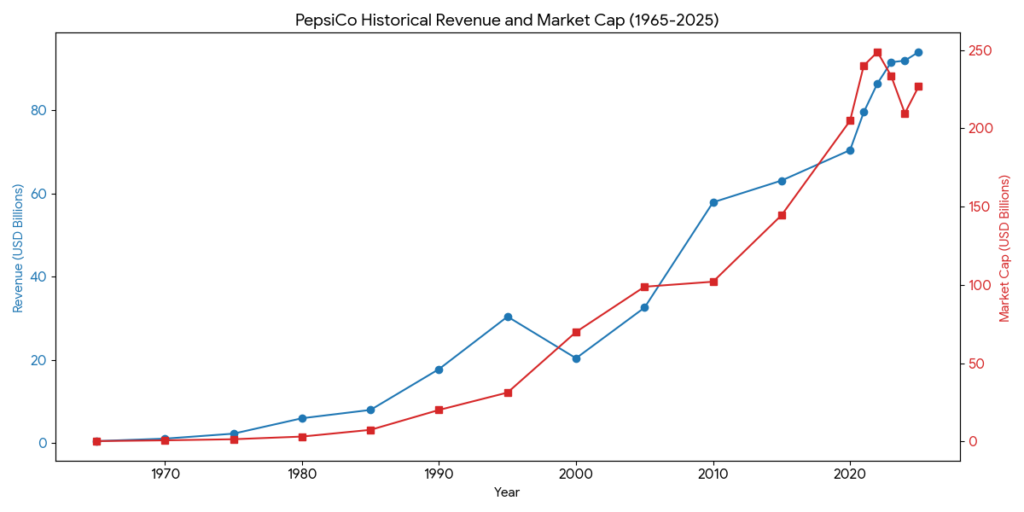
Here is the competitive analysis of PepsiCo in 2026, focusing on its strategic positioning against global giants.
1. PepsiCo vs. Coca-Cola: Diversification vs. Focus
The rivalry has evolved into a battle of business models: PepsiCo’s “Snacks & Drinks” ecosystem versus Coca-Cola’s “Total Beverage” strategy.
| Metric | PepsiCo (PEP) | Coca-Cola (KO) |
| Business Model | Integrated Diversification: Combines Frito-Lay (snacks) and Beverages. | Asset-Light Beverage: Focuses on concentrate sales and brand marketing. |
| Revenue Mix | ~58% Snacks, ~42% Beverages. | 100% Beverages. |
| Competitive Edge | Retail Power: Using Frito-Lay’s dominance to secure shelf space for drinks (Bundling). | Brand Equity: Superior margins and global leadership in sparkling soft drinks. |
| 2026 Strategy | Functional Growth: Scaling Rockstar Energy, Gatorade, and prebiotic sodas. | Core Expansion: Scaling Fairlife (dairy) and Topo Chico (alcohol/sparkling). |
2. PepsiCo vs. Nestlé: The Battle for Convenience
In the broader packaged food space, PepsiCo competes with Nestlé for the “stomach share” of the global consumer.
- Nestlé’s Edge: Dominates in high-margin categories like coffee (Nespresso), pet care, and specialized nutrition.
- PepsiCo’s Counter: Leveraging Quaker Oats and PopCorners to capture the “Better-for-You” snacking segment, which is growing at 6.5% annually as of 2026.
- Logistics: PepsiCo’s Direct Store Delivery (DSD) system remains a significant advantage, allowing them to restock snacks daily, a feat few competitors can match.
3. Core Strategic Moats (Competitive Advantages)
- Synergy of the “Power of One”: PepsiCo is the only company that can provide a “Meal and a Drink” solution at scale. This allows them to offer integrated marketing to retailers (e.g., Super Bowl bundles).
- Pep+ (PepsiCo Positive): By 2026, PepsiCo has integrated sustainability into its competitive strategy, using regenerative agriculture to lower costs and appeal to Gen Z consumers who prioritize ESG.
- Digital Dominance: Their proprietary AI platform, Pepviz, helps retailers optimize their store layouts, making PepsiCo an indispensable partner rather than just a supplier.
4. Key Threats in 2026
- The GLP-1 (Weight Loss Drug) Impact: As drugs like Ozempic become more common, PepsiCo faces the challenge of potential volume declines in high-calorie snacks. They are responding by aggressively pivoting to “Mini-cans” and baked (non-fried) snack options.
- Private Label Growth: Retailers like Walmart and Costco are improving their “Great Value” or “Kirkland” snacks, putting pressure on PepsiCo’s pricing power.
- Input Inflation: Fluctuating costs for aluminum and agricultural commodities (corn, potatoes) continue to pressure net margins despite price increases.
Source: https://www.pepsico.com/who-we-are/our-history
Back to Pepsico page