
1. Early Origins and the Three Private Distilleries (Pre-1951)
The history of Moutai dates back over 2,000 years to the Han Dynasty’s Gojiang wine. In the modern era, the brand was shaped by three private distilleries in Moutai Town:
- The Three Founders: Chengyi (Hua-Mao), Ronghe (Wang-Mao), and Hengxing (Lai-Mao).
- International Recognition: In 1915, Moutai won a gold medal at the Panama-Pacific International Exposition in San Francisco, marking its debut on the world stage.
Core Products: Hua-Mao, Wang-Mao, and Lai-Mao (the prototypes for today’s Moutai series).
Core Strategy: Traditional Craftsmanship. Strict adherence to the “1-2-9-8-7” brewing process (1-year cycle, 2 feedings, 9 steamings, 8 fermentations, and 7 extractions).
Revenue Level: Small-scale artisanal production with no modern accounting; however, it was already a renowned luxury good in Southwest China.
2. Nationalization and State-Owned Enterprise (1951-1977)
Following the founding of the People’s Republic of China, the government consolidated local resources.
- Merging the Distilleries: Between 1951 and 1952, the three private distilleries were merged to form the state-owned Kweichow Moutai Distillery.
- The “National Liquor”: During this period, Moutai became the preferred drink for state banquets and diplomatic gifts, solidifying its status as a cultural and political icon in China.
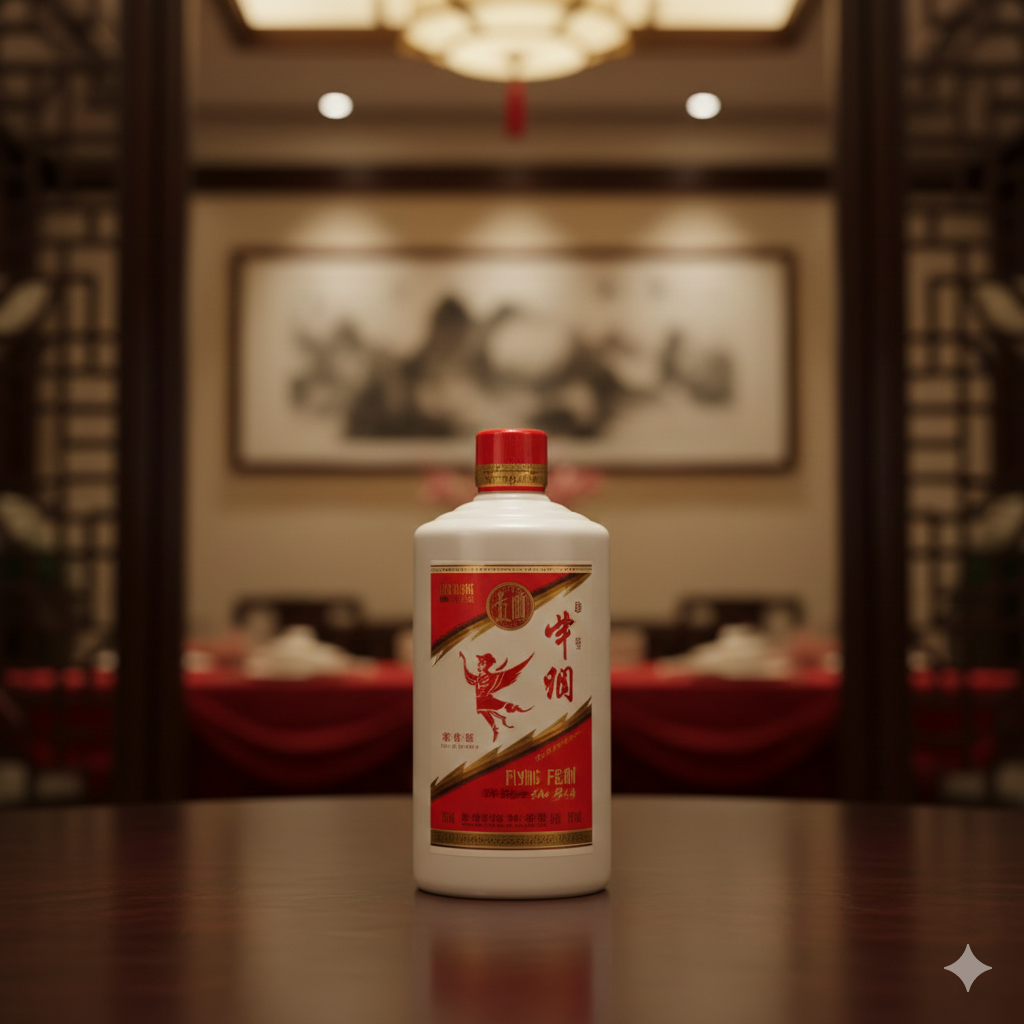
Core Products: Five-Star Moutai (Domestic) and Flying Fairy Moutai (Export).
Core Strategy: “National Liquor” Positioning. By appearing at diplomatic banquets, Moutai linked its brand to national honor, securing its spot as the “top tier” of Chinese Baijiu.
Revenue Level: Limited by a planned economy. In 1953, annual production was only about 75 tons, with minimal revenue scale.
3. Industrialization and System Reform (1978-2000)
As China entered the Reform and Opening-up era, Moutai transitioned from a traditional workshop to a modern enterprise.
- Capacity Expansion: The factory underwent several expansions to increase production while strictly maintaining the traditional “1-2-9-8-7” brewing process.
- Corporate Restructuring: In 1996, it was restructured into a wholly state-owned company, and Kweichow Moutai Co., Ltd. was established in 1997.
Core Products: 53% Vol Flying Fairy Moutai (Flagship) and the launch of aged vintage series (15, 30, and 50-year aged).
Core Strategy: Scale and Quality Expansion. Implementing scientific management to move production from 1,000-ton to 10,000-ton levels while preparing for capital market entry.
Revenue Level: Steady growth began. By 2000, on the eve of its IPO, revenue reached approximately 1.1 billion RMB.
4. Public Listing and Market Dominance (2001-2015)
This era marked Moutai’s rapid ascent in both the commercial and capital markets.
- Going Public: Kweichow Moutai was listed on the Shanghai Stock Exchange on August 27, 2001.
- The Golden Decade: Driven by China’s booming economy, both the retail price of the liquor and the company’s stock price surged.
- Strategic Pivot: After 2012, when government anti-corruption measures restricted official consumption, Moutai successfully shifted its target market to business and private high-end consumers.
Core Products: Flying Fairy Moutai (established as a “hard currency”) and Zodiac Commemorative bottles.
Core Strategy: Distributor Network & Brand Premium. Building a powerful dealer system. After 2012, when anti-corruption measures hit “official consumption,” the strategy pivoted quickly to private business and high-end personal consumption.
Revenue Level: Revenue crossed the 10 billion mark; by 2015, revenue reached approximately 32.6 billion RMB with a net profit of over 15.5 billion RMB.
5. High-Quality Development and Financial Powerhouse (2016-Present)
Moutai has evolved beyond a liquor brand to become a benchmark for the Chinese A-share market.
- Global Valuation Leader: It surpassed Diageo to become the world’s most valuable spirits company, with its market capitalization exceeding 1 trillion RMB.
- Digital Transformation: Launched the “iMoutai” app to implement a Direct-to-Consumer (DTC) model, gaining better control over pricing and distribution channels.
- Cultural Innovation: Engaged in high-profile collaborations (e.g., the Luckin Coffee “Latte with Moutai”) to appeal to younger generations and expand its brand ecosystem.
Core Products: Flying Fairy (Extreme Scarcity), Moutai 1935 (Targeting the 1,000 RMB mid-to-high market), and cross-brand collaborations (e.g., Jiang-Xiang Latte).
Core Strategy: Direct-to-Consumer (DTC) & Digitalization. Using the “iMoutai” app to increase direct sales and reclaim margins from distributors. Also promoting “Moutai Aesthetics” to attract younger demographics.
Revenue Level: Revenue surpassed 100 billion RMB. In 2023, revenue was approximately 147.7 billion RMB with a net profit of roughly 74.7 billion RMB and gross margins consistently above 90%.
Here is a competitive analysis of Kweichow Moutai in the global and domestic spirits market, structured for an investment perspective:
1. Competitive Moat Analysis
- Brand Dominance: Moutai possesses an unparalleled psychological position in China, acting as a “hard currency” for high-end social and business interactions.
- Geographical Exclusivity: The core production is restricted to a specific 7.5 square kilometer area in Moutai Town, where the unique microbial environment cannot be replicated.
- Financial Attribute: Unlike most consumer goods, Flying Fairy Moutai appreciates with age, giving it investment and collection value similar to a financial asset.
- Production Barrier: The “1-2-9-8-7” process requires a full year for production and at least four years of aging, creating a massive lead time that competitors cannot quickly bypass.
2. Competitive Landscape by Tier
Moutai operates in a unique position where it defines the price ceiling for the entire industry.
| Tier | Competitors | Focus of Competition |
| Ultra-Premium | Wuliangye, Luzhou Laojiao (Guojiao 1573) | Competing for market share in high-end business banquets and luxury gifting. |
| Sub-Premium | Shanxi Fenjiu, Yanghe, Langjiu | Competing in the 1,000–1,500 RMB price range, where “Moutai 1935” is positioned. |
| Sauce-Flavor Rivals | Langjiu (Qinghua Lang), Xi Jiu | Challenging Moutai’s dominance specifically within the “Sauce-flavor” technical category. |
3. Strategic Challenges & Threats
- Inventory & Price Control: Maintaining the gap between the official retail price (969–1,499 RMB) and the actual market price (often 2,500+ RMB) is a delicate balancing act for brand health.
- Direct-to-Consumer (DTC) Pivot: Through the “iMoutai” app, the company is aggressively reclaiming margins previously held by distributors to sustain profit growth.
- Demographic Shift: To combat the aging of its core consumer base, Moutai is experimenting with cross-brand collaborations (e.g., Luckin Coffee, Moutai Ice Cream) to lower entry barriers for younger generations.
- Macroeconomic Sensitivity: While resilient, extreme shifts in high-end business spending can impact the “velocity of circulation” for Moutai as a gift or investment.
Sources:
- https://www.moutaichina.com/
- https://finance.sina.com.cn/stock/relnews/cn/2023-10-20/doc-imzpwnyu2532152.shtml
- https://www.moutaichina.com/investors/ad_inf/announcement/
- https://finance.sina.com.cn/stock/relnews/cn/2024-04-02/doc-inarhryh4614216.shtml
Back to Kweichow Moutai page